
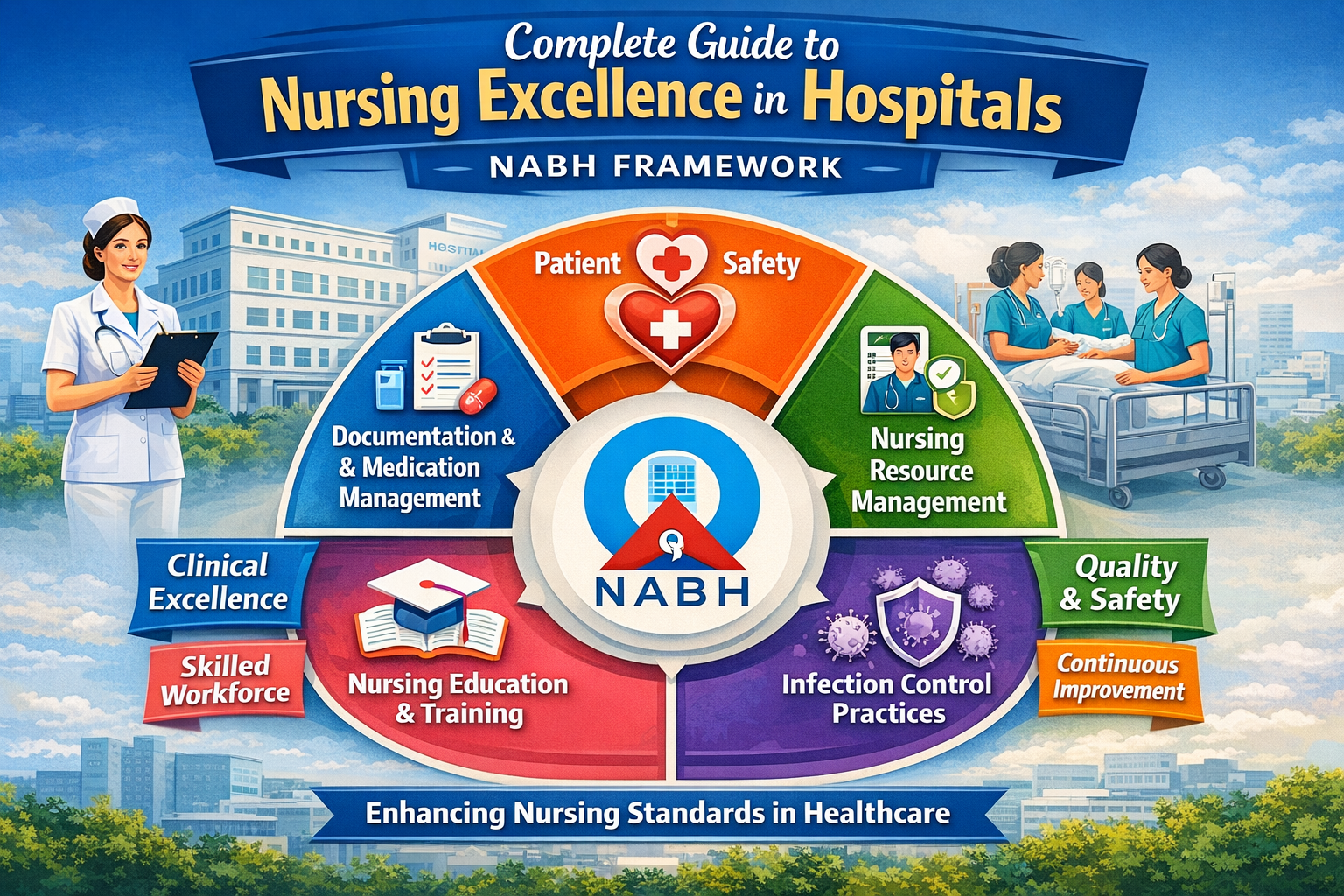
Complete Guide to Nursing Excellence in Hospitals (NABH Framework)
Introduction
Nursing Excellence is the backbone of high-quality healthcare delivery. In modern hospitals, especially those aligned with NABH standards, nursing is not just a support function—it is a strategic driver of patient safety, clinical outcomes, and patient satisfaction.
This comprehensive guide explores the NABH Nursing Excellence Framework, helping hospitals implement structured, measurable, and sustainable nursing practices.
What is Nursing Excellence?
Nursing Excellence refers to the systematic delivery of patient-centred, safe, and high-quality nursing care, supported by standardised processes, trained professionals, and continuous quality improvement.
It ensures:
- Improved patient safety
- Enhanced patient experience
- Strong clinical outcomes
- Better staff satisfaction
Why Nursing Excellence Matters in Hospitals?
Hospitals implementing Nursing Excellence achieve:
- Higher patient trust and community confidence
- Reduced medical errors and complications
- Better compliance with accreditation standards
- Improved workforce productivity
The 7 Pillars of Nursing Excellence (NABH Framework)
1️ Nursing Resource Management (NRM)
Focuses on staffing, competency, and workforce planning.
2️ Professional Nursing Practice (PNP)
Ensures quality care delivery, documentation, and patient-centred practices.
3️ Management of Medication (MOM)
Covers medication safety, infusion practices, and error prevention.
4 Education, Communication & Guidance (ECG)
Emphasises patient education and effective communication.
5️ Infection Prevention & Control (IPC)
Ensures adherence to hygiene and infection control protocols.
6️ Governance, Empowerment & Leadership (GEL)
Builds leadership, accountability, and nurse empowerment.
7️ Continuous Nursing Quality Improvement (CNQI)
Focuses on KPIs, audits, and continuous improvement.
Key Components of Nursing Excellence
Patient-Centered Care
Care that respects patient preferences and involves them in decision-making.
Standardized Documentation
Accurate, timely, and structured documentation of care.
Multidisciplinary Collaboration
Coordination with doctors, technicians, and allied staff.
Infection Control Practices
Strict adherence to hygiene and safety protocols.
Quality Indicators (KPIs) - Monitoring metrics like:
- Patient falls
- Medication errors
- Nurse-patient ratio
- Hand hygiene compliance
Role of Nursing Leadership
Effective nursing leadership ensures:
- Vision, mission, and values alignment
- Staff empowerment and motivation
- Continuous learning and development
- Strong governance and accountability
Transformational leaders drive innovation and improve care delivery.
How to Implement Nursing Excellence in Hospitals
Step 1: Define Nursing Policies & SOPs
Step 2: Train and Upskill Nursing Staff
Step 3: Implement Documentation Systems
Step 4: Monitor KPIs and Conduct Audits
Step 5: Strengthen Leadership and Governance
Step 6: Focus on Patient Safety and Experience
Role of Technology in Nursing Excellence
Modern hospitals are adopting digital platforms like HospitalHR™ to:
- Manage nursing competencies
- Track training and compliance
- Automate HR and payroll
- Monitor performance and KPIs
This ensures efficiency, compliance, and scalability.
Conclusion
Nursing Excellence is not a one-time initiative—it is a continuous journey of quality improvement, patient safety, and professional development.
Hospitals that embrace NABH standards and structured nursing frameworks will lead the future of healthcare delivery.

Comments (0)
No comments yet. Be the first to comment!