
Beyond the Chart:
Why Mastering Communication is the Ultimate Clinical Tool
In the high-stakes environment of a hospital, communication is more than just a soft skill—it is a critical clinical tool. Research shows that poor communication is a leading contributor to medical errors and delays. Conversely, when we communicate effectively, we directly improve patient safety, increase satisfaction scores, and build a brand reputation that the community trusts.
At HospitalHR.in, we believe in a structured approach to professional transformation. Here are three foundational steps your team can take to master hospital communication.
1. Building the Foundation of Trust
Every interaction, whether with a patient or a colleague, should be built on the 7 Cs of Clear Delivery:
- Clear, Concise, and Concrete: Get to the point without ambiguity.
- Correct, Coherent, and Complete: Ensure the information is accurate and flows logically.
- Courteous: Professionalism starts with respect.
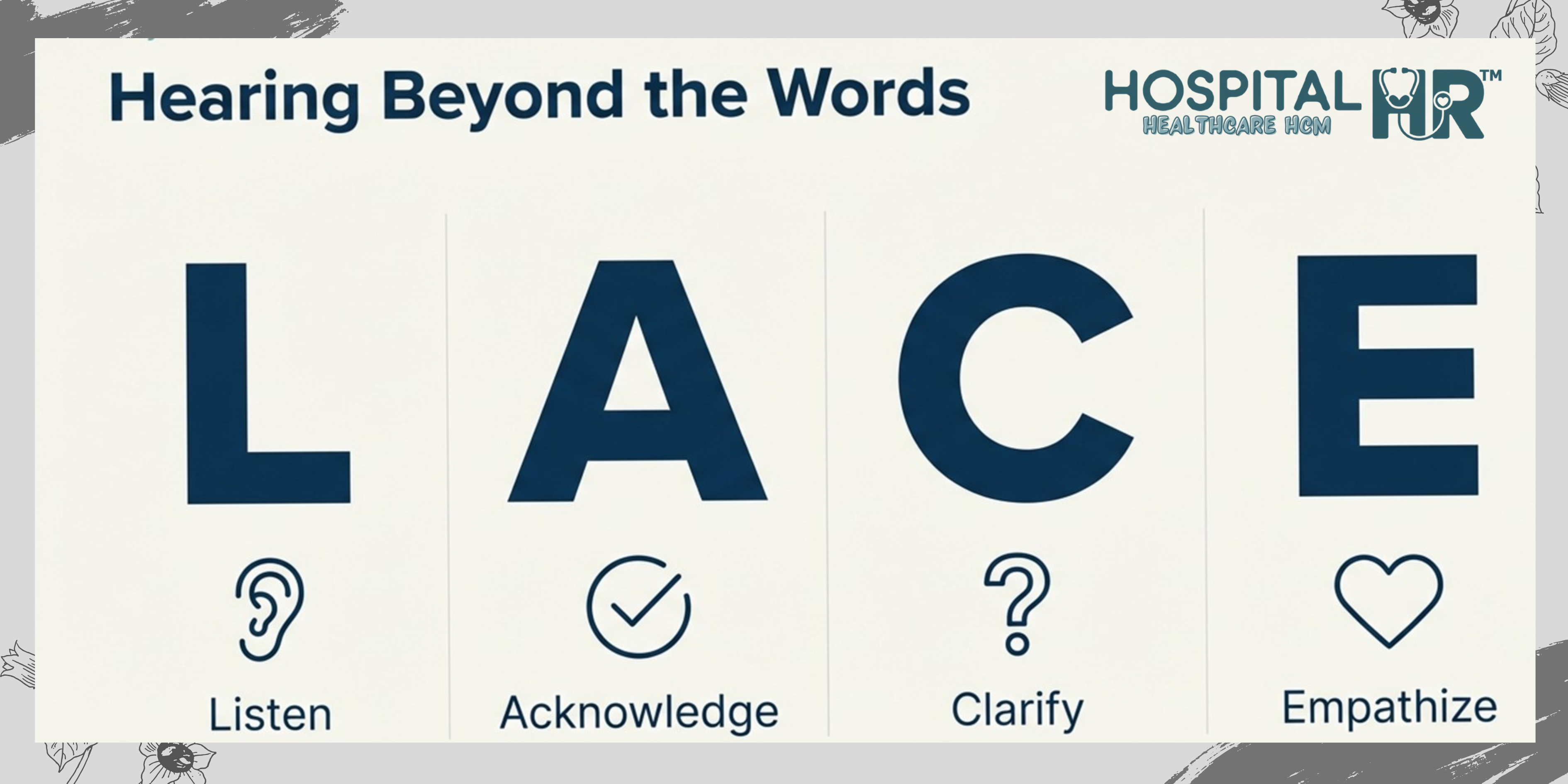
Remember, 90% of your message is non-verbal. A calm tone, steady eye contact, and an open posture are often more impactful than the words themselves. To truly "hear beyond the words," we recommend the LACE framework: Listen, Acknowledge, Clarify, and Empathise.
2. Navigating High-Stakes Interactions
Hospitals are emotional environments. When dealing with distressed families or angry patients, "Structured Empathy" is essential.
- The EARS Model: For families in high-stress areas like the ICU, use Empathise, Apologise, Respond, and Support to de-escalate.
- Zero Medical Jargon: Clear language reduces patient anxiety. Swap "myocardial infarction" for "heart attack" and "nil per os" for "nothing to eat or drink". Simple instructions ensure better patient compliance.
- Composure Under Fire: When facing billing disputes or language barriers, use the DESC method to stay professional: Describe the facts, Express feelings professionally, Specify the desired outcome, and state the Consequence if the issue persists.
3. Precision in Clinical Handoffs
Seamless coordination between the front desk, wards, and clinical teams is vital for efficiency. For reporting abnormal findings or escalating critical patient issues to doctors, the SBAR format is the gold standard:
- S - Situation: What is happening right now?
- B - Background: What is the relevant history?
- A - Assessment: What do you think the problem is?
- R - Recommendation: What do you need the other person to do?
This structured format cuts through the "noise" of a chaotic ward, turning a messy message into an actionable update.
Your Personal Action Plan
Communication excellence is a habit, not a one-time event. We challenge every healthcare professional to commit to:
- 3 Behaviours to Start (e.g., using SBAR, active listening).
- 2 Behaviours to Stop (e.g., using medical jargon with patients).
- 1 Communication Strength to Leverage.
Structured communication protects our patients, our hospital, and our peace of mind.
For more resources on healthcare HR and professional development, visit us at www.hospitalhr.in
Thanks & Regards
Dr Hari Prasad N
+91 8341392233

Comments (0)
No comments yet. Be the first to comment!