
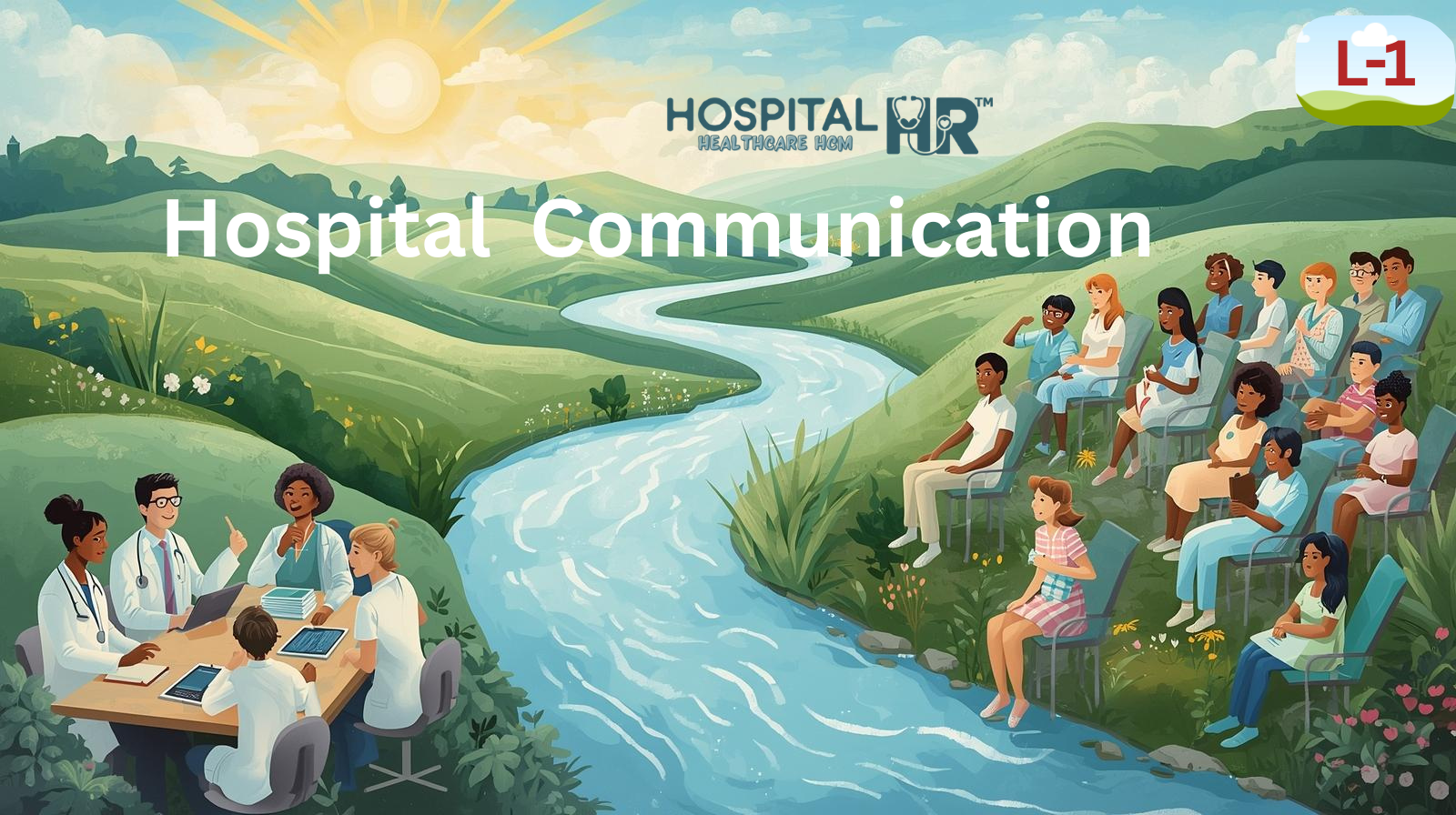
Communication in Hospitals
The Skill That Builds Trust and Prevents Escalations
Hospitals are not only places where patients receive treatment, but they are also places where people arrive with fear, pain, confusion, and hope. In such an environment, communication becomes as important as clinical expertise. A single sentence spoken with clarity can reduce panic. A small update given on time can prevent a complaint. And one missed message between departments can lead to delays, stress, and dissatisfaction.
By the end of this blog, you will know about the most essential communication practices that help hospital employees build trust, reduce conflicts, and ensure smoother coordination across departments.
Why Communication Matters in a Hospital Setting
In many workplaces, miscommunication may lead to delays or rework. But in hospitals, communication gaps can lead to:
- Delays in treatment
- Confusion during shift handovers
- Patient dissatisfaction and complaints
- Increased stress and burnout among staff
- Conflict between employees and departments
- In extreme cases, errors that affect patient safety
Hospitals work under constant pressure, with long queues, emergencies, emotional families, and tight timelines. Communication is the skill that holds everything together.
1. Communicate Clearly: Patients Don’t Speak “Hospital Language”
Hospital employees naturally use medical and technical terms. But for patients and families, these terms can sound scary and confusing.
Real-time example
A nurse says:
“Your CT is scheduled. Please wait for radiology.”
The patient’s family hears “CT” and assumes something very serious is happening. They panic and ask multiple staff members the same question, which creates more confusion.
A better version:
“We are doing a scan to understand the issue clearly. The radiology team will call you in about 30 minutes. I will update you if there is any delay.”
Why this works:
It reduces anxiety, sets expectations, and avoids repeated questions.
2. Listening Properly Prevents Escalation
Many patient complaints begin with one common sentence:
“No one is listening to us.”
In hospitals, people are often emotional. They may repeat the same point. They may be angry. But most of the time, they are not against the staff they are afraid for their loved one.
Real-time example
A patient says:
“Since this morning, I have been feeling dizzy. Nobody is doing anything.”
A rushed response:
“The doctor will come, please wait.”
A better response:
“I understand you’re feeling uncomfortable. Since morning, you’ve had dizziness, right? I will inform the duty doctor immediately and update you in 10 minutes.”
Why this works:
It makes the patient feel heard and gives a timeline. Even if the doctor takes longer, the staff member has built trust.
3. Show Empathy Without Over-Promising
Empathy is essential in hospitals, but employees must avoid giving false assurance.
Real-time example
A family member asks:
“Will my father be okay?”
An unsafe response:
“Yes, yes, he will be fine.”
A professional and empathetic response:
“I understand your concern. The doctor is currently reviewing his condition and will speak with you shortly. Right now, we are monitoring him closely and giving the required care.”
Why this works:
It provides comfort without making a promise that cannot be guaranteed.
4. Give Timely Updates: Silence Creates Anxiety
In hospitals, people become frustrated not only by waiting but also by uncertainty.
A patient can wait longer if they know what is happening. But if nobody updates them, even a small delay feels like negligence.
Real-time example
A patient is waiting for discharge. The family keeps asking the nurse:
“When will we get the discharge summary?”
If the nurse replies:
“Not yet, please wait.”
The family gets irritated, and the frustration grows.
A better response:
“The doctor has completed the rounds. The discharge summary is being prepared, and it may take around 45 minutes. If it takes longer than that, I will check again and update you.”
Why this works:
It sets expectations and reduces repeated questions.
5. Handle Angry Patients and Families with Calm and Structure
In hospitals, anger is common, but it is usually a reaction to fear, helplessness, or exhaustion.
When staff respond emotionally, the situation escalates quickly.
Real-time example
A family member shouts:
“You people are not treating me properly! What kind of hospital is this?”
A defensive response:
“We are doing our job, don’t talk like that!”
A better response:
“I understand you are upset. Let me explain what is happening right now and what the next step is. I will also call the duty doctor to update you.”
Why this works:
It acknowledges emotion and brings the conversation back to facts and solutions.
6. Internal Team Communication: Smooth Coordination Saves Time
Patients see the hospital as one unit. They don’t differentiate between departments. But internally, hospitals involve many teams working together: nurses, doctors, pharmacy, lab, billing, radiology, housekeeping, and security.
When departments don’t coordinate properly, the patient experience suffers.
Real-time example
The doctor prescribes a medicine urgently. The nurse assumes pharmacy has it. The pharmacy assumes the ward has received the indent. The patient waits, and the family complains.
A better practice is closing the communication loop, for example:
- “Medicine request sent to pharmacy at 2:10 PM.”
- “Pharmacy confirmed availability at 2:15 PM.”
- “Expected delivery by 2:30 PM.”
Why this works:
It reduces confusion and prevents delays.
7. Shift Handovers Must Be Clear and Complete
Shift handovers are one of the most critical communication points in hospitals.
Real-time example
Outgoing nurse says:
“Patient is stable.”
The incoming nurse assumes everything is normal, but later the family says:
“He had breathlessness twice today.”
A better handover:
“Patient is stable now. He had two episodes of breathlessness in the afternoon; oxygen was given, and the doctor was informed. Monitor oxygen saturation every 30 minutes.”
Why this works:
It ensures continuity of care and prevents missed information.
Communication Roles Across Hospital Departments
Communication is not only a doctor’s or nurse’s responsibility. Every department contributes:
- Front Office & Reception: First impression and patient guidance
- Billing Team: Sensitive conversations with families
- Housekeeping: Courtesy and professionalism in patient spaces
- Lab Team: Accurate communication of timelines and sample requirements
- Pharmacy: Clear instructions and availability updates
- Security: Calm control in difficult situations
- Ward Support Staff: Daily comfort, clarity, and reassurance
Each interaction shapes the hospital’s reputation.
Small Communication Habits That Make a Big Difference
Hospital employees can improve communication with small daily habits, such as:
- Introducing yourself and your role
- Explaining the next step clearly
- Avoiding jargon with patients
- Giving time estimates honestly
- Updating patients proactively
- Staying calm during conflict
- Confirming handover details
- Saying “Let me check” instead of guessing
These habits reduce stress among staff and create and build trust for patients.
Conclusion: Communication is a Core Hospital Skill
Hospitals are places where emotions run high and time is critical. In such an environment, communication is not an optional skill it is a core capability.
When hospital employees communicate with clarity, empathy, and professionalism, they build:
- Smoother Teamwork
- Stronger Patient Trust
- Better Hospital Experience
- More Confidence among Staff
- Fewer Complaints and Escalations
In healthcare, communication is not a soft skill.
It is a skill that supports care.
"A single, lucid phrase can still a rising storm."
Compiled by - RAGA

Comments (0)
No comments yet. Be the first to comment!